Before initiating a new fitness program it is very important to get clearance from your physician.If you want to lose weight, then get moving, get active. By working out at an aerobic intensity you boost your metabolism and that is exactly what you need. Your aerobic exercise needs to be done at an intensity that brings your heart rate up to YOUR target heart rate zone (reference Target Heart Rate under “Fitness and You”) and also reference About Target Heart rate and Achieving Optimal EXERCISE INTENSITY. Exercise combined with a low-fat, high complex carbohydrate diet is a formula for weight loss success. A healthy weight loss amount is one to two pounds per week. Regarding weighing yourself, if weight loss is one of your primary goals, it is a good idea to get a starting weight and to weigh yourself once a week or once every two weeks but do not obsess with the scale.
Weight is comprised of much more than fat which is the kind of weight you want to lose. On a day to day basis you will have fluctuations in fluid weight and as you become more and more fit, your body composition will shift to an increased percentage of muscle and non-fat body mass relative to fat body mass. Muscle mass weighs more than fat. In addition to weighing yourself you can measure your body fat percentage to help track your progress with fat weight loss. If you make a commitment to an active lifestyle combined with a low fat high carbohydrate diet, you are on the pathway to weight loss and a healthier, happier life.
Weight Management Stretching Guidelines:
Stretching is important for maintaining flexibility-range of motion, better overall mobility and as part of a warm-up to help prevent injury before starting your aerobic exercise routine. Since a weight loss fitness program requires moderate to high intensity aerobic workouts, stretching is especially important for promoting flexibility which can help prevent injury during your higher intensity aerobic session. Stretching is also very valuable after an aerobic work-out. Stretching after a workout is effective because the elevated tissue temperature just after an aerobic workout facilitates more flexibility while stretching. In general, stretches should be held for a minimum of 15 seconds and up to 30 seconds. Stretches should be repeated two-four times.
Weight Management Strength Training Guidelines:
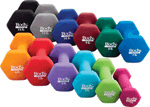
Strength training is important to maintain muscle composition. After age 25 without regular strength training, we lose 1/2 pound of muscle every year. This can be prevented with strength training to maintain muscle. An increase in muscle, increases your overall physical strength and increased muscle composition also leads to increased bone strength. Additionally, Increased muscle composition increases your metabolic rate to promote weight loss. General guidelines for strength training include: Alternate every other day upper body and lower body strength training or complete an overall body strength training regiment every other day. Lift weights for larger muscles before smaller muscles because the smaller muscles are needed to assist the larger muscles. Lift reps to exhaustion-also called Max Resistance-to build muscle strength. For weight loss goals you should lift high reps and lower weight -12-20 reps to fatigue. A weight lifting circuit training routine is a great idea for weight loss because with weight lifting circuit training you are building muscle and revving your cardiovascular system at the same time. With weight lifting circuit training, you perform a series of weight training exercises, from 4-10 stations, with little rest in between. You then repeat the circuit 3-5 times. Whether you do circuit training or not, many different kinds of activities can be used to build muscle strength-free weights, nautilus machines, Resistance band stretching, body weight lifting exercises-e.g. pull-ups, push-ups and squats. It is important to find strength training exercises that you enjoy so you stick with your program.
Weight Management Aerobic Exercise Guidelines
Types of Aerobic exercise: Any activity that you can do which will get your heart rate up and which you enjoy is a great choice. There are so many exercise options-walking, group aerobics, jogging, basketball, tennis, swimming, gym machines-elliptical, treadmill, stationary bike, stair master, hiking, home aerobic exercise to DVDs, water aerobic, boxing, dancing etc.To keep the work out varied and interesting, you can do
aerobic circuit training. In a gym setting you would choose 4-8 aerobic exercise stations and exercise about 5 minutes on each at an aerobic intensity of 65-90% of max heart rate, resting 15 seconds in between stations.Frequency: 5-7 days a weekDuration: At least 30 minutes a day. For newly initiated fitness programs work up gradually to 30 minutes a day and then build on that foundation. Increase your duration gradually up to 45 + minutes.
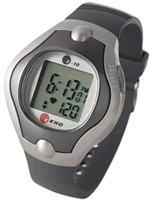
Intensity: It is very important to exercise at an intensity that gets your heart rate up to your target aerobic heart rate range which is 50%-90% of max heart rate (Reference “You and Fitness” for YOUR Target Heart Rate) Also reference About TARGET Heart rate and Achieving Optimal EXECISE INTENSITY. As you progress with your fitness program and increase your cardiovascular and muscular- skeletal strength, you will be able to exercise at a higher intensity. For weight loss you should gradually work up to an exercise heart rate of at least 65% of your max heart rate. For improving cardiovascular strength and for weight loss it is a great idea to do interval workouts. An interval workout is one in which you vary the intensity of your workout during your workout session, always staying in your aerobic target heart rate range. With the variance you are able to work out for a longer duration and at a higher average work out intensity.
As an example, you might do a power walk/jog exercise routine in which you do a warm-up walk for about 10 minutes at 55% of max heart rate and then increase up to a power walk of about 65% of max heart rate for 6 minutes and then you might increase your pace to a jog at 75% of max heart rate for about 3 minutes and then slow down again to a power walk at 65% of max heart rate for 7 minutes and then again increase your pace to a jog at about 75% of your max heart rate for 4 minutes and then reduce your pace for 5 minutes to 65% of max heart and then further reduce your pace to 55% of max heart for another 5 minutes to give yourself a 10 minute gradual cool down. This will give you a 40 minute workout with about a 63% of Max average heart rate including warm-up and cool-down and a core workout that averages 68% of your max heart rate . You can do interval workouts while jogging or biking or using the elliptical or swimming or any aerobic workout you choose. When measuring heart rate you can count your radial pulse on your wrist near your thumb or your carotid pulse on the side of your neck. When using your carotid pulse on the side of your neck be careful not to press to hard. (add graphics). You should count your pulse at either location for 15 seconds starting with 0 and multiply by 4 to get your one minute pulse which you can then compare to your target heart rate for your age under Fitness and You->Target Heart Rate.
When determining your level of aerobic intensity, in addition to using your target heart rate you can also use the simple but effective method of Rate of Perceived Exertion. For this method you evaluate your exercise intensity by monitoring your breathing, amount of sweating and level of fatigue. You can also use the talk test-it should be difficult to talk if you are exercising at an effective aerobic intensity-the more difficult it is for you to talk, the higher your exercise intensity. Also reference Achieving Optimal Intensity.
Weight Management Nutrition Guidelines :
Maximize healthy complex carbohydrates. Carbohydrates should contribute about 50-60% of your daily calorie intake. Eat whole grain breads, brown rice or foods which list whole grains as a primary ingredient.
Eat healthy fats-Choose omega-3 rich foods such as salmon or albacore tuna. Fat should contribute less than 25% of your daily calorie intake.
Reduce Saturated Fat and trans fats
Avoid high fat dressing on salads, high fat sauces on meats, vegetables or pasta (marinara sauce is a healthy option) and use butter and cream cheese in moderation or choose reduced fat options.
Reduce simple carbohydrates-foods with added sugar such as cookies, cakes, soda with high fructose corn syrup
Eat a variety of foods to ensure you consume all the required vitamins and minerals. You can also take a multivitamin.